Client story · Shanghai · Xi’an · Zhangjiajie · Guilin · Chengdu
China at Seventy: 13 days, 5 cities, and not one day gritting our teeth
We are a couple, seventy-four and sixty-eight. Since retiring we have been to more than a dozen countries, but never China — it always looked too big, and we were worried about the walking. This is the route we actually walked, what it cost, and the six things our travel designer talked us out of.
I · Why these five places
Let me be honest: almost all of this route was our designer’s doing.
Our first draft had seven cities and flew in and out of Beijing. It sounded like “seeing everything worth seeing.” She read it and asked one question: “Do you want to see China, or do you want to enjoy yourselves?”
China is too big for thirteen days; you can commit to one line and no more. Her rule: never backtrack.
We started in Shanghai because international flights are plentiful, jet lag is easier to absorb, and the city is “light” — the Bund, the museum, the plane-tree streets. Xi’an is China’s history class: the Terracotta Army and Huaqing Pool fill a day and a half neatly. We gave Zhangjiajie four nights, and it was the single smartest decision of the trip — one hotel in the mountains, no repacking. Guilin and Yangshuo were two days for the eyes to rest: four hours on the Li River by boat, no walking. Chengdu closed the loop, then a direct flight to Kathmandu instead of doubling back through Beijing.
II · Six traps steered around
At our age, three things frighten us when we travel: rushing, waiting, and carrying. We assumed the cure was “pay more, book better.” Her answer was simpler: take less away.
| What we first wanted | What she suggested | What actually happened |
|---|---|---|
| Boutique guesthouses with character, not another identikit five-star | Most boutique places in China have no suites, and the service cannot keep up. Take a five-star Junior Suite: big room, firm bed, strong water pressure. | Twelve nights, every one in a suite. Sleep at night and you have energy by day. |
| Add Pingyao, Dunhuang and a Three Gorges cruise | Pingyao costs two days taken from Zhangjiajie, Dunhuang is too far, and a Three Gorges cruise is three days at least. | We cut all three. The time went to four nights in Zhangjiajie and an extra day in Chengdu. |
| We wanted to see “Chinese opera” in Xi’an | Nothing suitable was playing. She put in the Great Tang All Day Mall instead — a Tang-style street with free performances after dark. | We walked that street for more than an hour and watched the roly-poly act. The liveliest evening of the trip. |
| Leave Chengdu unscheduled and wander on our own | Take one more day and choose: Dujiangyan, or the Leshan Buddha — by boat, so no stairs. | We chose Leshan. Seen from the water, 71 metres tall, and not a single step climbed. |
| We will buy our own tickets and maglev tickets | The museum and the maglev need a guide to book; the big sights are all real-name reservations. | Thirteen days without queuing once, and without scanning a single code at a gate. |
| Bring US dollars and credit cards | China barely uses cash. Install Alipay and link your card before you fly. | Thirteen days without touching a banknote. Even a bottle of water is a scan. |
Three of the six were “don’t go.” We expected a designer to add things to our plan. What she actually did was build the most sensible plan around our bodies and our stamina.
Something she said that we did not understand at the time: “I want you to spend money in China, but not waste it.” We understand now.
III · The money
US$10,414 for the two of us — roughly 37,000 RMB each. That excludes international air and the visa, but it covers every “trouble after landing.”
Included
- Itinerary design and live adjustment — five versions before departure
- Twelve nights in five-star Junior Suites, breakfast daily
- Three domestic flights, one in business class
- Two first-class high-speed rail legs
- Private seven-seat car and driver throughout
- English-speaking guide throughout
- Domestic travel accident insurance; two bottles of water per person per day
On your own
- International flights
- Single supplement
- Lunch and dinner — the guide recommends, you order
- Visa fee
- Tips, optional
- Personal spending and optional extras
- Extra personal travel insurance — we suggest adding your own
Why it was worth it: twelve nights in five-star suites, three domestic flights, two first-class rail legs, a seven-seat car with only two of us in it, and an English-speaking guide who stayed with us the whole way. Booked piece by piece ourselves it would not have been cheaper — and we would have been frantic.
IV · The thirteen days
This is the version we actually travelled: three stops more than the first draft, and a few things re-ordered.
| Date | City | The day’s focus |
|---|---|---|
| 3/22 | Shanghai | Airport pick-up · the Bund at night |
| 3/23 | Shanghai | Shanghai Museum · plane-tree streets · maglev · Xintiandi |
| 3/24 | Shanghai → Xi’an | Fly to Xi’an · Muslim Quarter · Great Tang Mall |
| 3/25 | Xi’an | Terracotta Army (shuttle + headsets) · Huaqing Pool |
| 3/26 | Xi’an → Zhangjiajie | Fly to Zhangjiajie · check in and rest |
| 3/27 | Zhangjiajie | Yuanjiajie · Yangjiajie · Tianzi Mountain |
| 3/28 | Zhangjiajie | Golden Whip Stream · Ten-Mile Gallery |
| 3/29 | Zhangjiajie | Tianmen Mountain · cable car · glass walkway · Grand Canyon glass bridge |
| 3/30 | Zhangjiajie → Guilin | 7.5-hour high-speed train, first class |
| 3/31 | Guilin → Yangshuo | Four-hour Li River cruise · West Street · Ten-Mile Gallery by e-bike |
| 4/1 | Yangshuo → Chengdu | Dawn cormorant fishing · fly to Chengdu |
| 4/2 | Chengdu | Leshan Buddha by boat · tea in People’s Park · Sichuan opera face-changing |
| 4/3 | Chengdu → Kathmandu | Airport transfer |
D1 · Landing in Shanghai, the Bund after dark
We landed at Pudong in the afternoon and a driver took us straight to the hotel. Room on the 18th floor, the river right outside the window. After dinner we walked to the Bund. March in Shanghai is still cold and the wind comes off the water; we lasted ten minutes before turning back — but that wall of lights is worth it. The Pearl Tower across the river, the two of them watching each other from different centuries.
D2 · Shanghai, the “light” city
In the morning, the Shanghai Museum. With a guide: two hours, only the bronze and painting galleries, then out. At our age you cannot be greedy in a museum — see two things, remember two things. Better than walking all eight. In the afternoon we wandered the plane-tree streets and stopped for coffee in an old house. Then the maglev: 431 km/h, eight minutes to the airport and eight minutes back, purely for fun. In the evening we heard jazz in Xintiandi and were back at the hotel by ten.
D3 · Flying to Xi’an, the Great Tang Mall at night
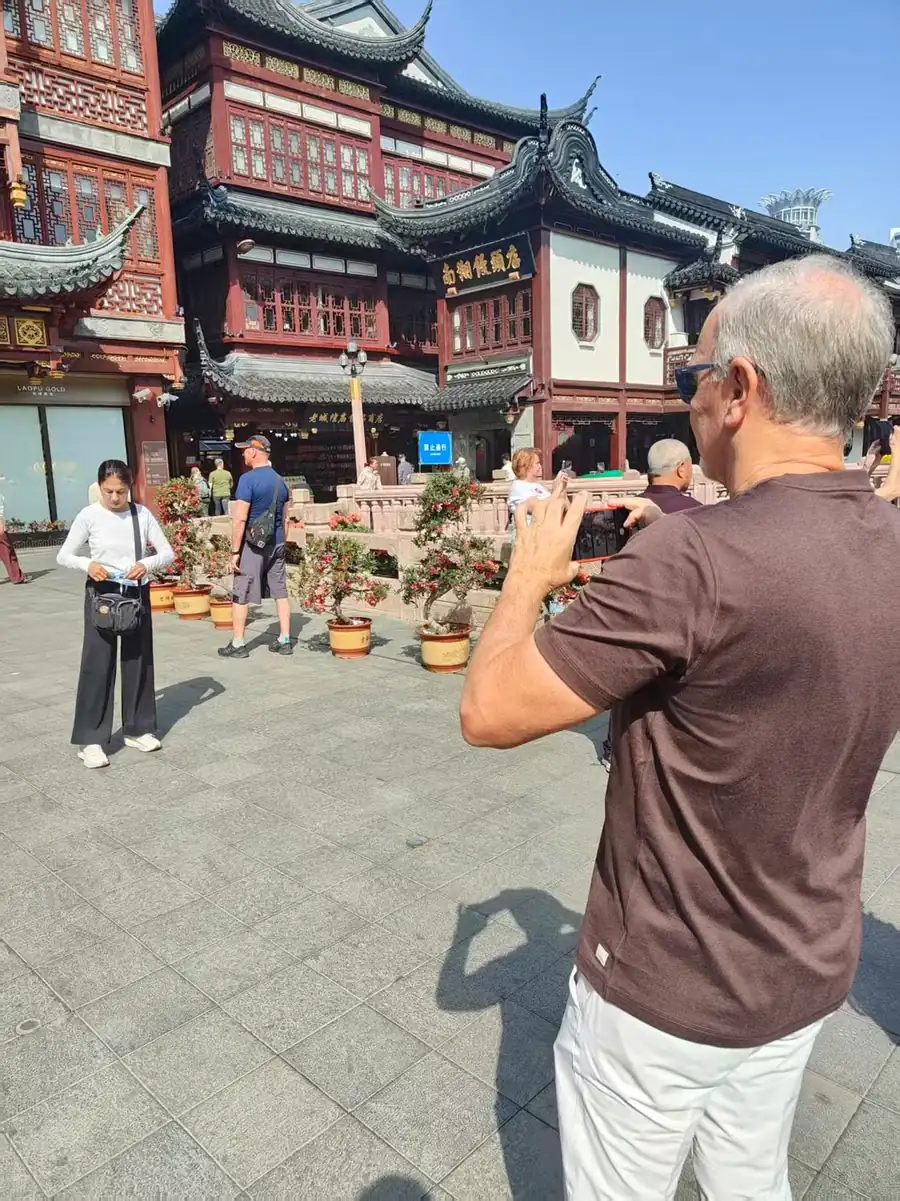
A 10:30 flight in business class, three hours to Xi’an. Lunch on arrival, then a slow walk through the Muslim Quarter — a roujiamo and a persimmon cake. At night, the Great Tang All Day Mall. Ten times better after dark: every light on, people in Tang dress drifting past, free performances in the middle of the street. We walked for an hour, then sat at the kerb and watched the roly-poly “Tang lady” act — pure joyful noise.
D4 · The Terracotta Army, and a hot spring in the afternoon
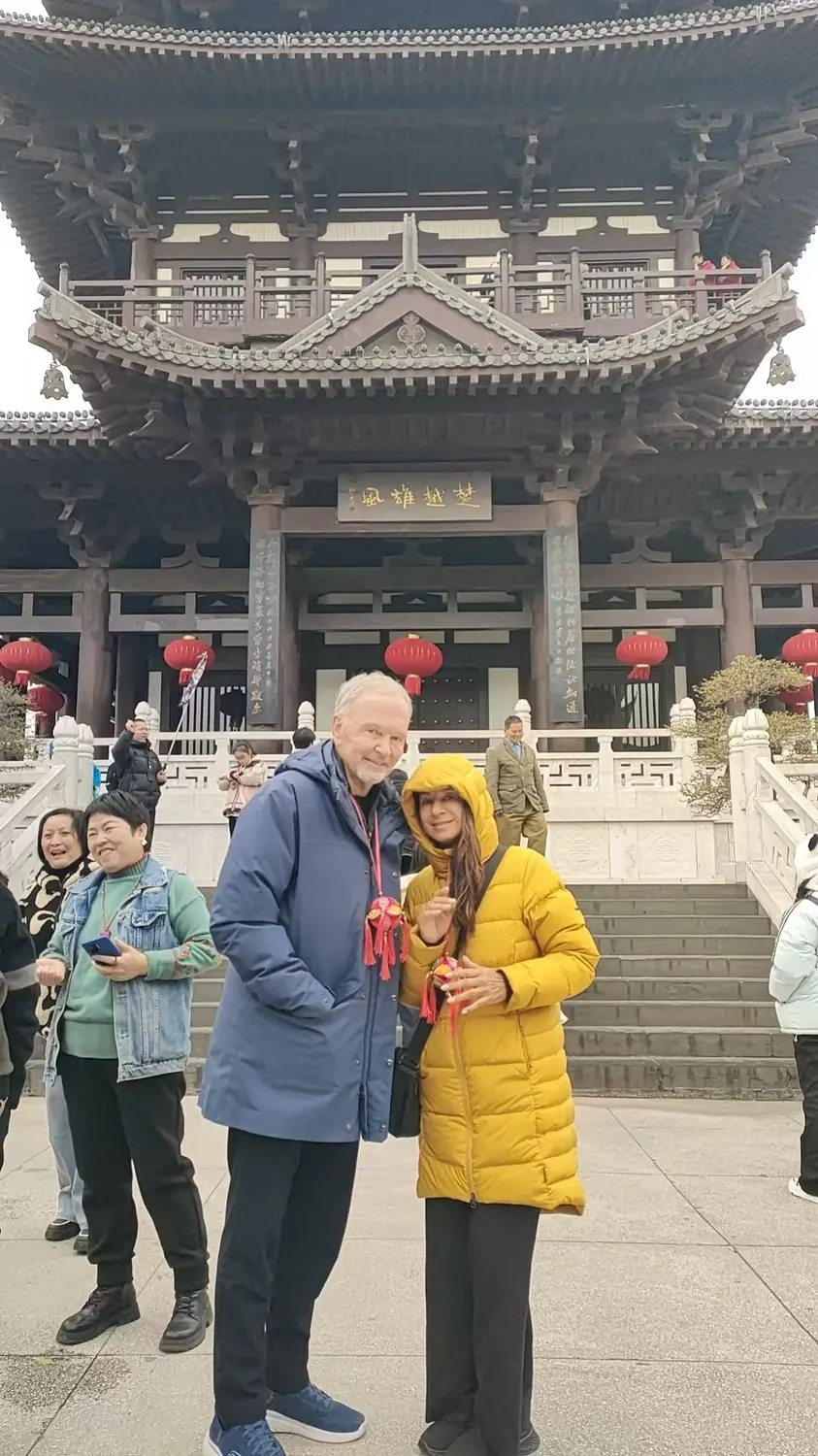
You cannot come to China and skip the Terracotta Army. The tickets arranged for us included the shuttle and headsets, so we never had to fight a crowd to hear the guide. We stood at Pit No. 1 for a long time — that sense of an army standing underground is not something a photograph can hold. In the afternoon, Huaqing Pool. Forty minutes in the hot spring and my legs felt weightless — after three days of walking, that soak mattered. We were back at the hotel by 5:30. Her rule: one “hard” sight a day, no more.
D5 · Flying to Zhangjiajie — and doing nothing
The 8:55 flight, ninety minutes to Zhangjiajie. Checked in at noon, went nowhere all afternoon, slept beautifully. Most people charge up the mountain on their first day. Our designer would not let us. Altitude, humidity, several days of travel — all of it wants a buffer day.
D6 · Yuanjiajie, Yangjiajie, Tianzi Mountain
The Bailong lift took us up in 66 seconds. When the pillars came out of the mist, the whole car said “whoa” at once. Yuanjiajie is the real-life inspiration for the floating mountains in Avatar; Yangjiajie is quieter; Tianzi Mountain has the widest platforms. About twelve thousand steps that day. Back at the hotel by four, feet in hot water, asleep.
D7 · Golden Whip Stream and the Ten-Mile Gallery
Golden Whip Stream runs 7.5 km but the path is flat; we took two and a half hours, sitting by the water three times. The Ten-Mile Gallery we did on the little train. This was the gentlest of the four days, and it sat in exactly the right place — climbing the day before, Tianmen Mountain the day after, one slow day in between.
D8 · Tianmen Mountain, and that glass bridge
The Tianmen cable car takes almost half an hour, straight from the city up to the summit. I made it a third of the way along the glass walkway and turned back; my husband walked the whole thing, then turned round and laughed at me. In the afternoon we added the Grand Canyon glass bridge. The most thrilling day of the trip — and the day my husband was proudest of.
D9 · Seven hours by train, to Guilin
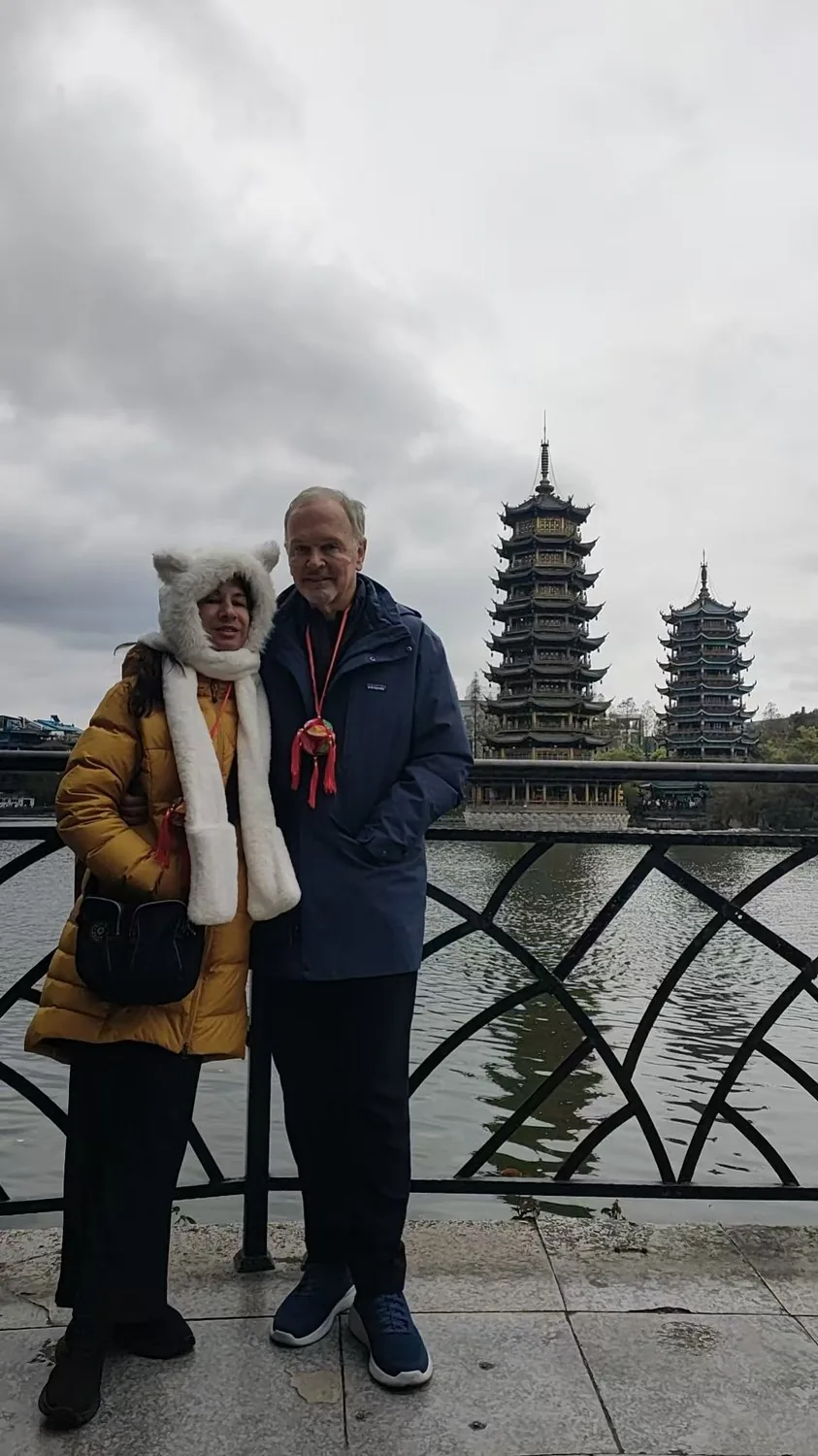
The 7:17 departure, first class, into Guilin at 14:13. Seven hours sounds long; it was not hard: wide seats that recline, and mountains changing outside the window the whole way. We checked in on arrival — the window looked straight at Elephant Trunk Hill and the Sun and Moon Pagodas.
D10 · Four hours on the Li River, then Yangshuo
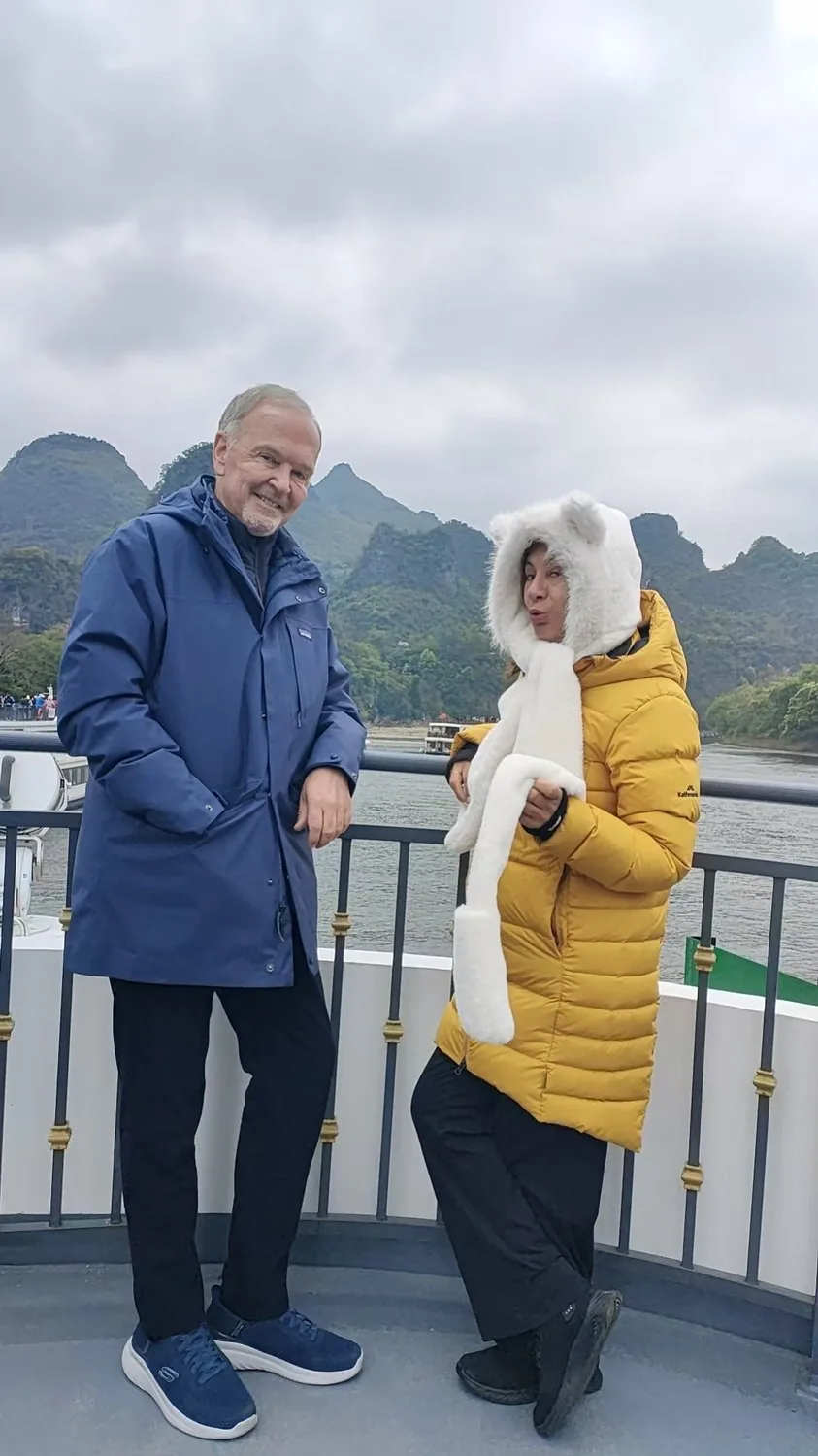
The morning cruise from Guilin to Yangshuo, four hours. The most comfortable stretch of the whole trip: sitting while the mountains came to us, one after another. No walking, no hurrying, and lunch served on board. Yangshuo in the afternoon: West Street, then a rented e-bike along the Ten-Mile Gallery. Electric — when your legs give out, twist the throttle. Ninety minutes of rice paddies, water buffalo and small villages.
D11 · Cormorants, a bamboo raft, then Chengdu
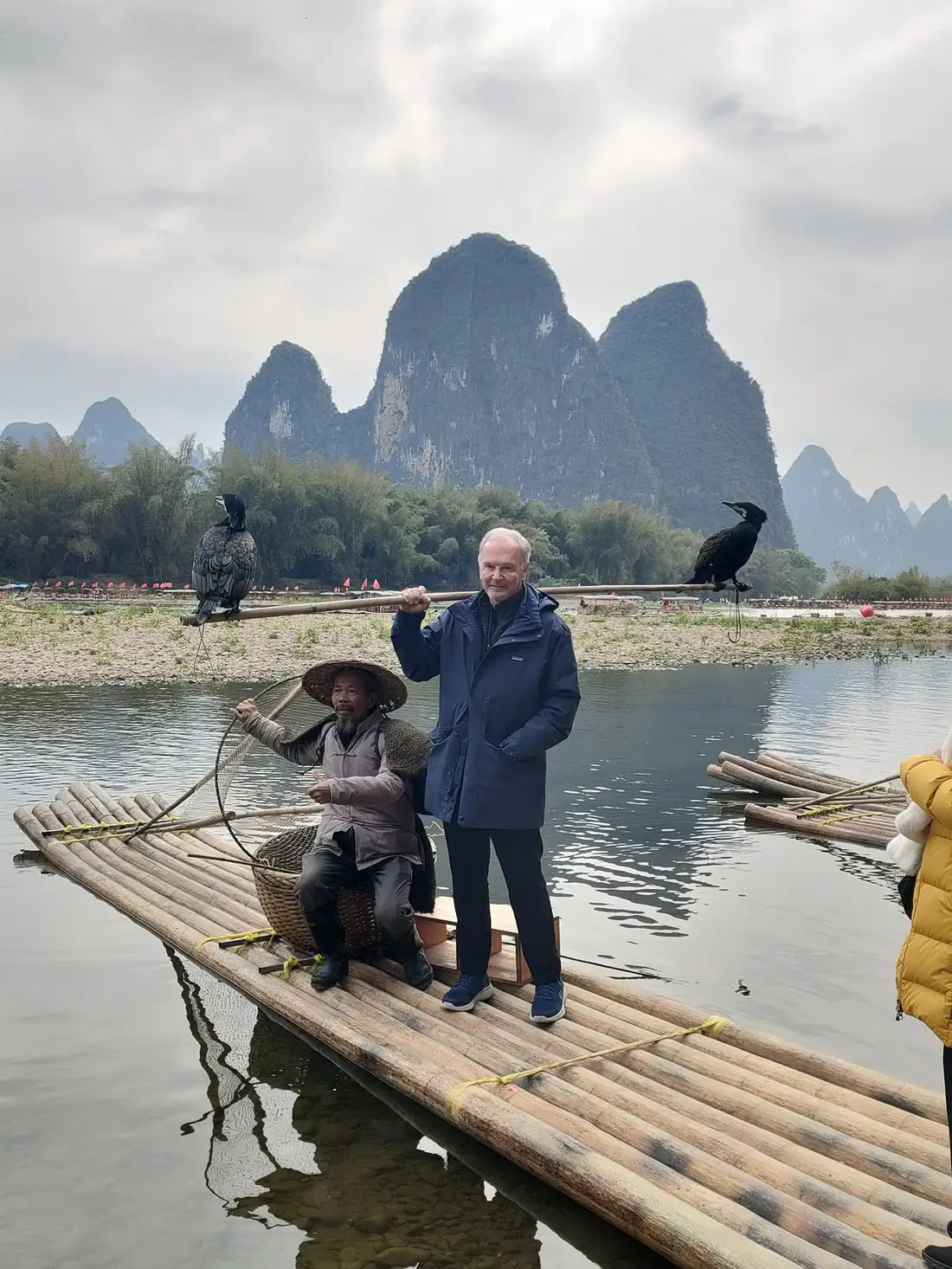
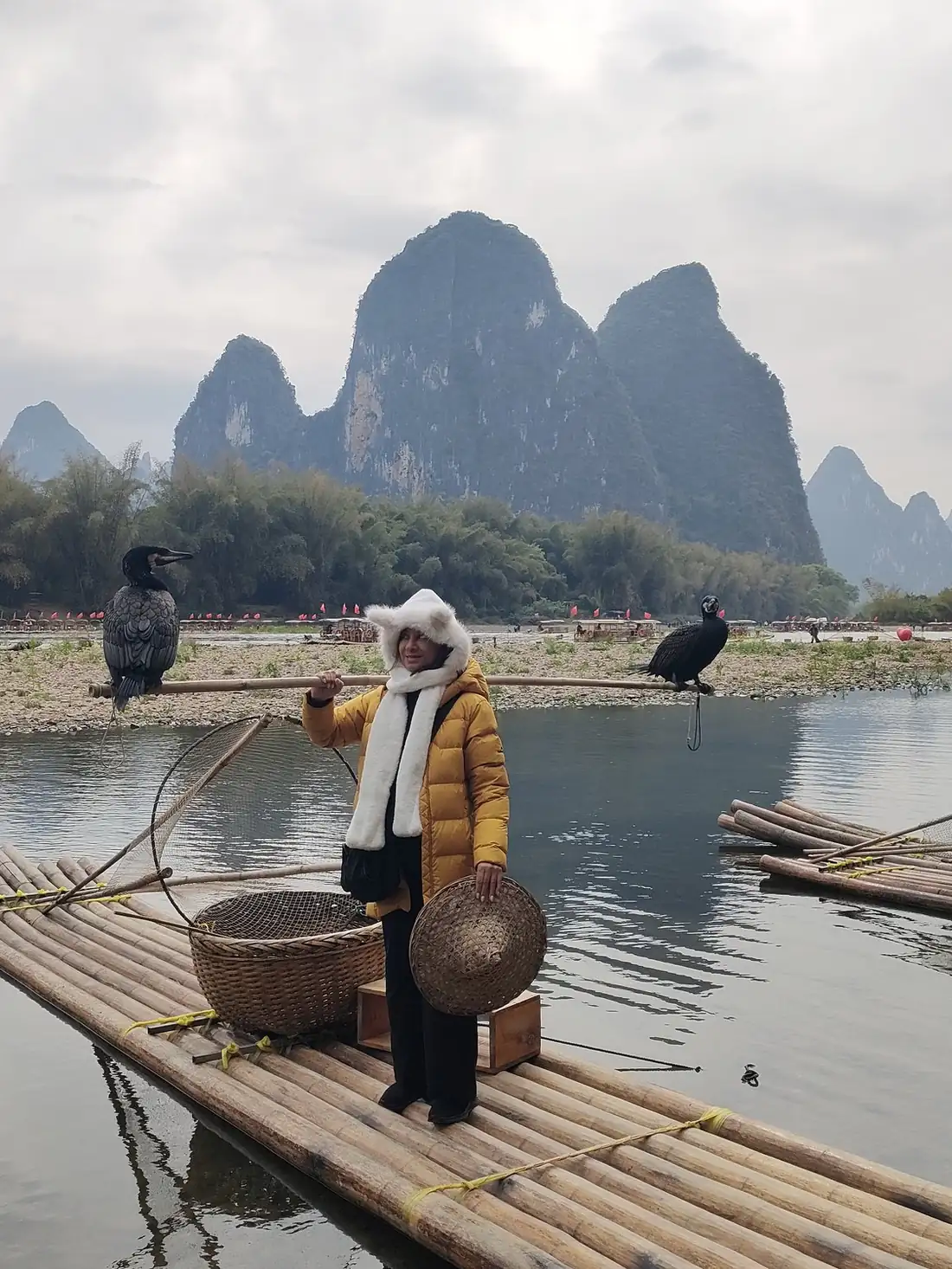
Up at 5:30 to watch cormorant fishing. The sky was not light yet, the river was all mist, an old fisherman poled his bamboo raft with two black cormorants on the bow. He whistled once and they went into the water. We got on a raft too. He handed us conical hats and a bamboo pole and told us to pose — probably the most touristy moment of the trip, and we laughed all the way through it. Back to the hotel to check out at noon, then the afternoon flight to Chengdu.
D12 · The Leshan Buddha, and a cup of tea in People’s Park
In the morning to Leshan, to see the Buddha from a boat. Far easier than climbing: look up from the water at a 71-metre figure who has been sitting there for more than a thousand years. When the river is high you cannot climb anyway — the boat is the steadier choice. Back in Chengdu in the afternoon, tea in People’s Park. Bamboo chairs, lidded cups, ear-cleaners circling with their tools. We sat there nearly two hours, playing Chengdu residents for an afternoon. In the evening, Sichuan opera face-changing — mask after mask, and at the end even the costume changed.
D13 · Flying to Kathmandu
A 9:25 flight. The driver was at the hotel by 6:30; the bags had been packed the night before. Thirteen days, five cities, a great many steps — and not one day spent gritting our teeth. That is the trip we wanted.
V · Six moments
- The wind on the Bund. March river wind is brutal, but that row of lights keeps you standing there anyway.
- Pit No. 1. Standing at the edge, you suddenly understand what the word “history” means.
- Mist in Yuanjiajie. The pillars appeared and disappeared, and the whole bus said “whoa” together.
- Out the window of a seven-hour train. The mountains kept changing — grey to green, sharp to round.
- The moment the cormorant hit the water. A flat splash, and then nothing but rings spreading across the river.
- An afternoon in People’s Park. The ear-cleaner circled with his tools; none of us said a word.
VI · Five details that made this trip easy
- Stay put. Four nights in Zhangjiajie, two in Chengdu, two in Shanghai. You unpack once and save yourself a great deal of shuffling.
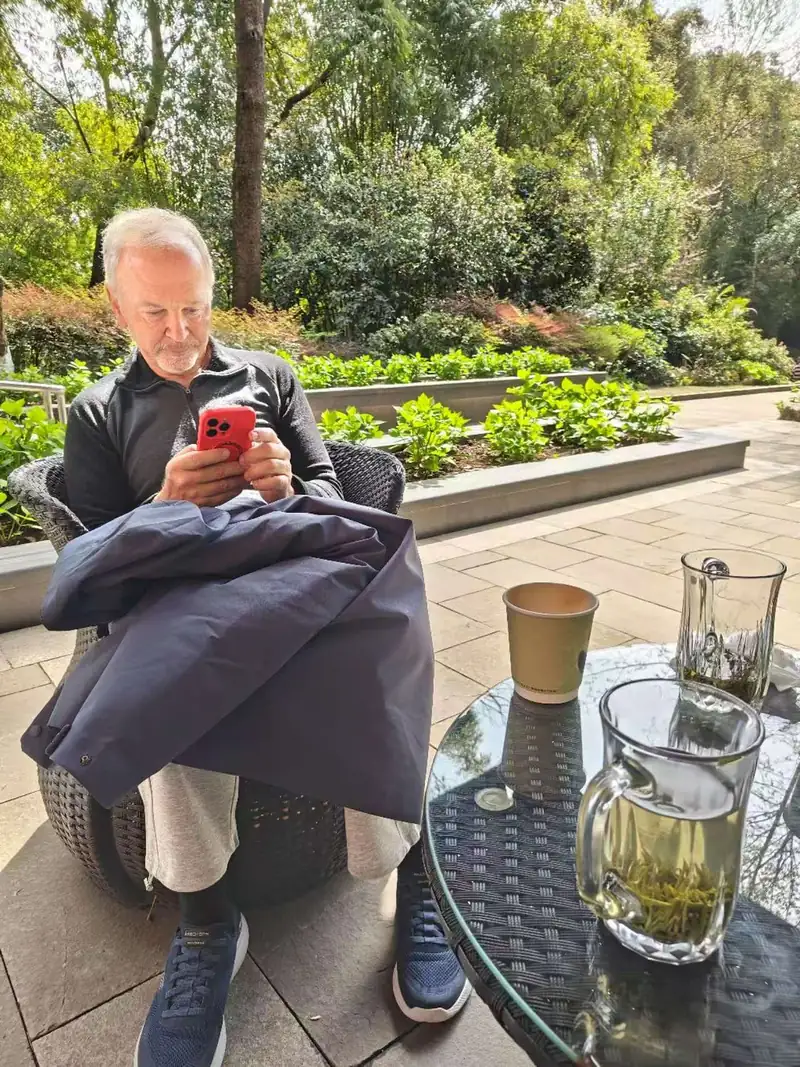
- A five-star Junior Suite. A big room, a firm bed, strong water pressure. Those three things matter enormously at our age.
- A seven-seat car for two people. The back rows stayed empty — room for legs, for coats, for things we had bought. No squeezing in, no waiting to get out.
- Breakfast only. We ordered our own lunches and dinners, with the guide recommending local places. No fixed group meals, no being herded into shops.
- One “hard” sight a day. The rest of the time went to tea, hot springs and sleep. The blank spaces on the itinerary are the ones that actually did the work.
VII · Eight things to avoid — for travellers our age
- Don’t be greedy. Pingyao, Dunhuang and the Three Gorges cruise are all beautiful, and none of them fits into thirteen days. Every place you add costs you two days of rest.
- In Zhangjiajie, stay inside the park — and stay put. Commuting in and out every day burns half your energy before you have walked anywhere.
- Museums and the big sights require real-name reservations. Send passport details a week ahead; do not plan on scanning a code at the gate.
- At the Terracotta Army, pay for the shuttle and the headsets. The walk in is long, and the headset lets you hear the guide even in a crowd.
- The glass walkway and the glass bridge are optional. If you cannot face it, wait at the side. Nobody will laugh at you.
- March has a wide north–south temperature spread: 10°C in Shanghai, 15°C in Xi’an, 8°C up the mountain in Zhangjiajie, 20°C in Guilin. Bring a light down jacket and a windproof shell. April, May and June would probably suit older travellers better.
- You barely need cash and mostly cannot swipe a card. Install Alipay and link your credit card before you fly. Far easier than we expected.
- Visas: an official invitation letter plus hotel and flight confirmations is what an operator can give you. Whether a visa is issued is the embassy’s decision. Anyone who tells you it is guaranteed is lying.
VIII · Three ways to travel, and how to choose
| Bus group tour | Fully independent | Private custom tour | |
|---|---|---|---|
| Pace | Rushed — three or four stops a day | Free, but you plan it all | One main sight a day, changeable any time |
| Planning | Fixed route, not adapted to you | You research it yourself and never learn where the traps are | Built around age and stamina; five versions before departure |
| Hotels | Four-star, out of town | You pick, and hope | Five-star Junior Suite, location first |
| Transport | Coach and queues | You buy tickets and drag the luggage | Private seven-seat car, business / first class |
| Meals | Set group meals | You find it yourself | Breakfast only; lunch and dinner your choice |
| When things go wrong | Ask the guide — the guide has little power either | You deal with it | One phone call, fixed the same day |
| Best for | Budget first, able to rush | Young and happy to improvise | People who want to travel comfortably without the worry |
IX · If you would like to walk this way too
We booked through a local travel company in Kunming. Our designer built our itinerary and revised it five times. Our first version had seven cities; she crossed two out before we had even discussed them. We said we wanted boutique guesthouses — she did not go along with it. She explained that most boutique properties in China have no suites, and gave us a five-star alternative. A consultant who will not simply agree with you is a consultant you can relax with.
The company is Yunnan SevenColor International Travel Service Co., Ltd. The contract is filed and verifiable on the Ministry of Culture and Tourism’s platform, and payment goes to the company’s corporate account. We checked all of it before we left.
If you would also like to walk through China slowly, talk to us directly. Shanghai, Xi’an, Zhangjiajie, Guilin, Chengdu, Yunnan — we know them all well. Tell us every place you want to add; we will probably talk you out of half of them, and that is precisely what you are paying for.
What you hire is not “someone who books hotels.” It is someone who dares to tell you “trust me, this suits you better.” In thirteen days we never argued about the itinerary, never queued at a gate, never worried about money or payment. Those things that never happened are the most expensive part of the trip.
Planning something similar? Tell us who is travelling, roughly how many days you have, and one sentence about what you want them to remember. There is no charge for a first draft route.
Related reading: what a private car and guide actually costs in China · where to go in China with children